
The procurement request that sounds simple
“Can you reduce the green by 5%?”
For a procurement or product team, this may sound precise. In mass-colored glass, however, the phrase often describes a visual preference rather than a variable that can be adjusted and reproduced in isolation.
Glass color is influenced by the material and production system. Even when a supplier is working from the same intended recipe, variation may still need to be evaluated from batch to batch and under defined viewing conditions.
The practical challenge is to translate a subjective color request into an approval standard that the buyer and manufacturer can evaluate together.
Why glass color is more complex than it looks
In mass-colored, or through-colored, glass, the visible result may be influenced by:
- colorants and base-glass composition
- melting temperature and temperature history
- furnace conditions
- glass thickness
- product shape
- lighting conditions used for evaluation
These factors interact. A change intended to reduce green may also affect hue, saturation, transparency, or the way the glass appears in different environments.
For this reason, a percentage instruction should be treated as a starting point for clarification, not as a complete technical specification.
Why cleaning the pot does not guarantee identical color
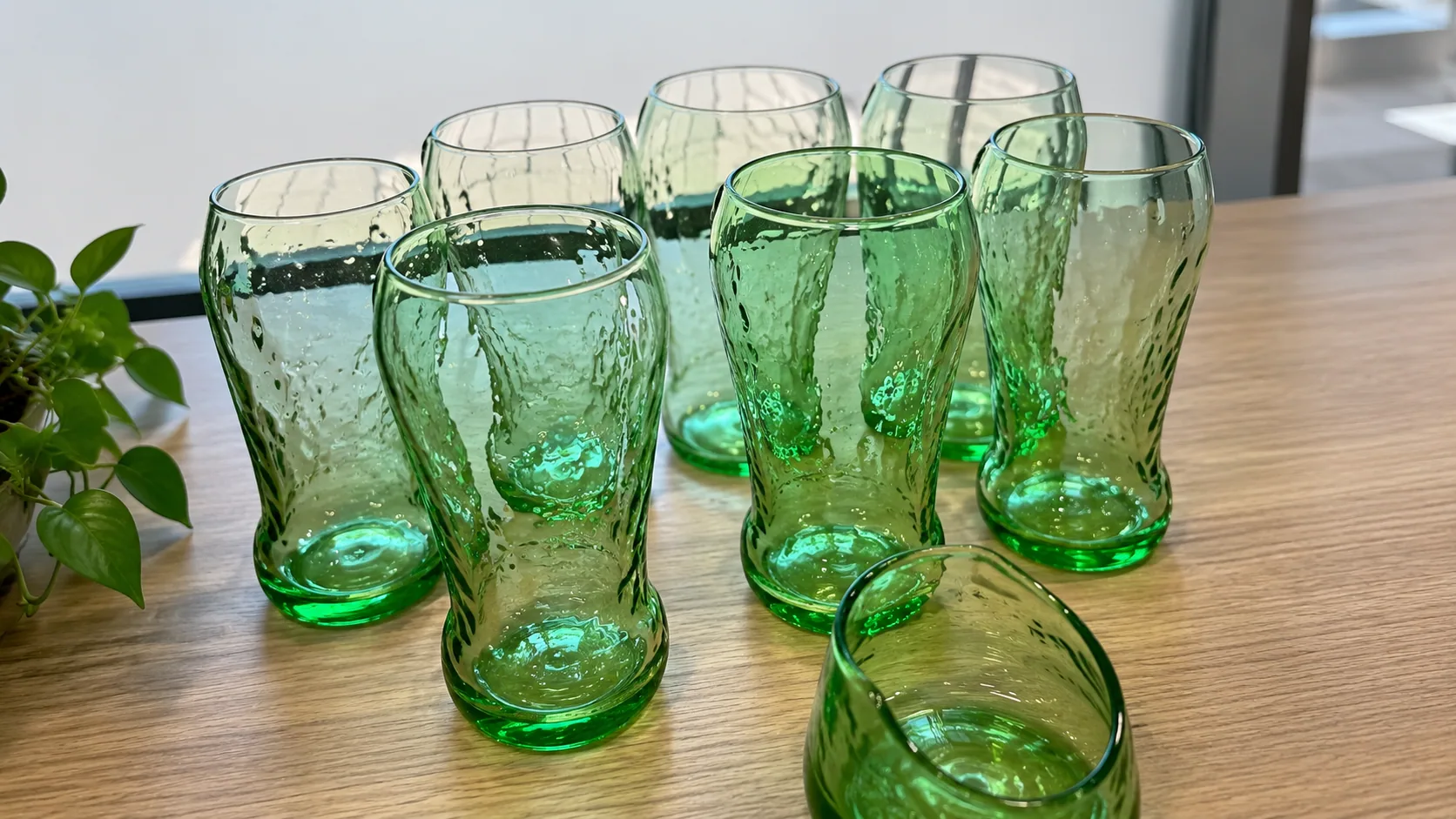
Before a new color run, the pot or crucible may be cleaned to reduce carry-over from an earlier melt. That step can be relevant to process control, but it does not remove every source of variation in a glass-melting system.
Material condition, furnace history, temperature behavior, and other project-specific factors may still influence the next batch. The useful buyer question is therefore not only whether the pot was cleaned, but how the color result will be sampled, compared, and approved.
Clarify what the production unit means for your project
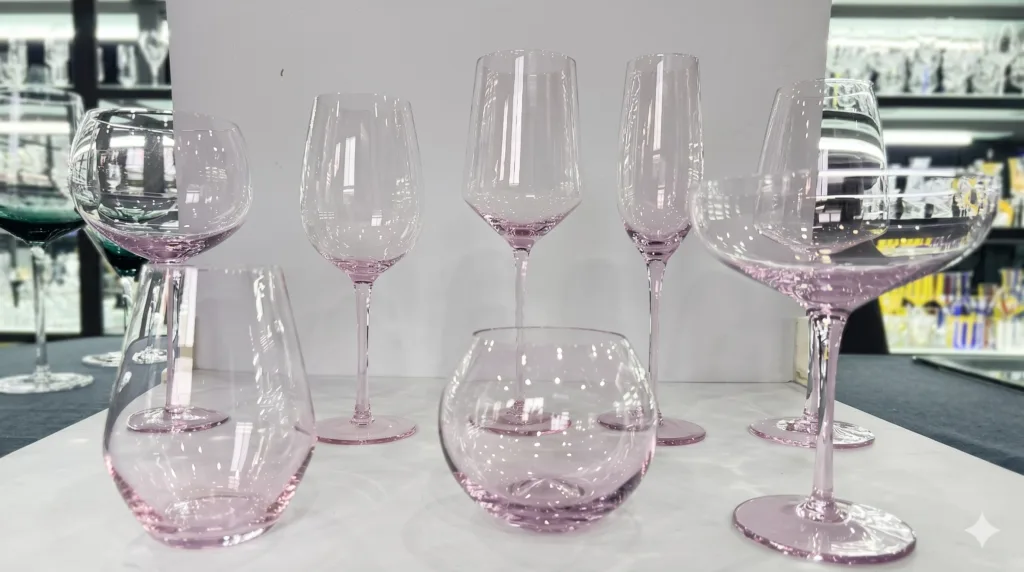
In some mass-colored glass projects, the production plan may be organized around a melt or color batch rather than one individual SKU. This can affect how a buyer discusses multiple shapes, colors, order quantities, sampling, and scheduling.
Do not assume that one factory’s MOQ structure applies to every product. Ask the supplier to confirm:
- whether multiple SKUs can share the same color batch
- how additional colors affect the production plan
- which quantity assumptions apply to the proposed project
- how color approval relates to the production batch
What buyers should request instead
The objective is not to find a perfect percentage adjustment. It is to define a repeatable visual standard.
1. Provide a physical reference
A physical reference sample gives the buyer and supplier a shared visual target. If a physical sample is not available, document the alternative reference and its limitations.
2. Define the desired outcome
Describe the intended result in observable terms, such as:
- slightly less green while maintaining the intended transparency
- maintain the general hue while reducing visual saturation
- achieve a specified appearance under an agreed lighting condition
These descriptions still require confirmation through samples. They should not be treated as universal technical definitions.
3. Record the evaluation context
The reference should be reviewed with relevant context, including lighting, product thickness, shape, and surrounding colors where these affect perception. The buyer and supplier should agree how the comparison will be made.
4. Approve a production reference
Once the target is agreed, record the approved sample and the acceptance approach. Future samples or batches can then be compared against a shared reference instead of separate impressions.
5. Use controlled sample options
Rather than requesting unlimited changes, ask for a small number of clearly differentiated options and define what decision each option is intended to support. The number of samples and the sequence should remain project-specific.
A practical workflow for color approval
For a buyer or product team, a project workflow may include:
- Provide a physical reference or documented visual target.
- Define the lighting and viewing context.
- Confirm the supplier’s batch and quantity assumptions.
- Review controlled color options.
- Approve a production reference sample.
- Record the acceptance criteria before production begins.
This workflow helps the team make the decision visible. It does not replace project-specific technical review.
Final takeaway
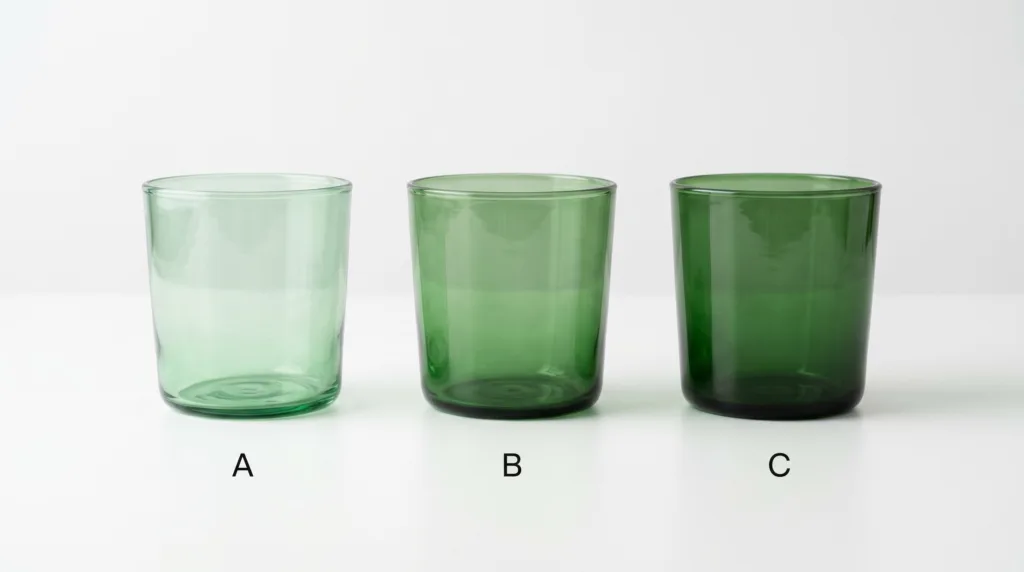
In mass-colored glass, “5% less green” is rarely enough information on its own. A more useful specification connects the color reference with lighting context, thickness, an agreed acceptance window, and a clear approval process.
The projects that move more clearly are not necessarily the ones with the most complicated color language. They are the ones where the buyer and manufacturer agree on what will be compared before production begins.
If your project depends on a specific colored-glass appearance, share the reference, intended application, product forms, and evaluation conditions so the color-development discussion can begin with a defined buyer requirement.
Need to specify a colored-glass result?
Bring the color reference, product forms, application, and evaluation conditions into the sampling discussion before approving the production standard. Contact Eukaglass about an RFQ.
FOR PROFESSIONAL BUYERS
Planning a Glassware Project?
Discuss product requirements, samples, sourcing, manufacturing, or OEM development with our team.