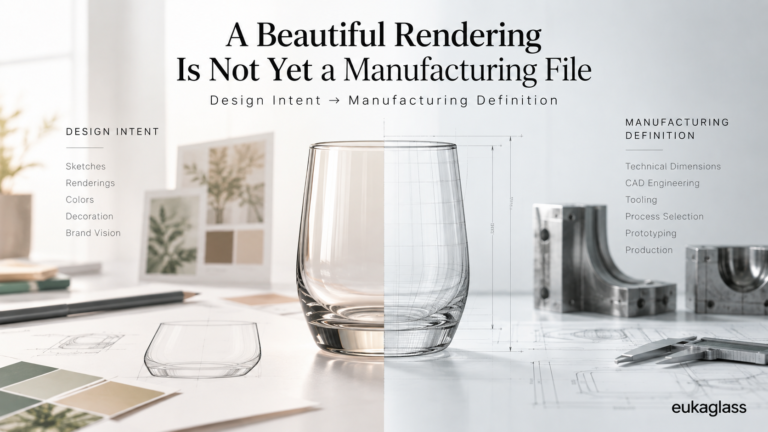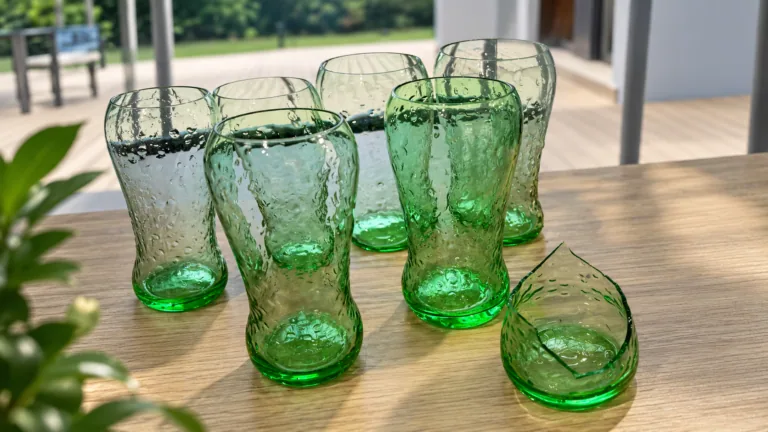
Finishing is part of the product brief
Post-processing can give a standard or custom glass form a different visual character. It may support branding, gifting, hospitality presentation, or a particular collection identity.
For a professional buyer, the important question is not which finish is most impressive in isolation. It is which process supports the intended design, application, artwork, approval standard, and production plan.
Gold plating and gilding
Gold plating or gilding can be applied to selected areas such as a rim, pattern, or logo. It may create a formal or decorative effect for dining, gifting, or special collections.
Before approval, clarify:
- which areas will receive the finish
- how artwork and placement will be controlled
- how the sample will be evaluated
- which care and use conditions apply
- what evidence supports any wear or durability statement
The visual effect can be reviewed from a physical sample. Performance, food-contact suitability, cleaning resistance, and permanence require product-specific confirmation.
Acid etching
Acid etching can create a frosted or matte effect by changing selected areas of the glass surface. It may be used for patterns, logos, or understated decoration.
The buyer should confirm the design scale, placement, surface appearance, and the relationship between the etched area and the product’s intended use. Do not assume that an etched finish is automatically permanent, safe for every use, or resistant to every cleaning condition.
Spray color or surface painting
Spray color can add a selected visual treatment to a glass surface. It may be relevant when the product brief calls for a surface color, accent, pattern, or collection variation.
Ask the supplier to clarify:
- the proposed finish and application area
- sample and color-approval requirements
- how the finish is evaluated under the intended lighting
- whether handling or cleaning requirements affect the choice
- which colorfastness or durability evidence is available
The appearance of a finish is separate from a claim about wear, dishwasher use, or long-term performance.
Sandblasting
Sandblasting can create a textured or frosted surface and may support patterns, logos, or other decorative effects. The buyer should review the actual texture, contrast, placement, and tactile result on the intended product.
Any statement about precision, durability, cleaning, or resistance should be confirmed for the specific finish and use case.
Engraving
Engraving can add a design to the glass surface using a selected tool or process. It may be suitable for personalized, commemorative, branded, or detailed products.
Before sampling, define the artwork, scale, location, depth or visual effect where relevant, and the standard for approval. The available level of detail and the final appearance depend on the product and process.
Combining finishing methods
Multiple finishes can create a layered visual effect, such as a surface pattern combined with gilding or engraved detail. Each additional step can add another approval and process question.
Review the combined sample for:
- overall visual balance
- artwork and placement
- interaction between finishes
- handling and care requirements
- inspection and approval criteria
Do not assume that a combination is suitable simply because each individual finish is available.
Separate design effect from technical performance
When briefing a finish, write two separate lists.
Intended visual effect
- color, contrast, gloss, or matte appearance
- logo or pattern placement
- tactile or textured impression
- relationship to the glass form and collection
Performance questions to verify
- cleaning and care conditions
- wear, scratching, or fading
- food-contact suitability
- adhesion or surface stability
- transport and handling requirements
The first list describes the design goal. The second requires evidence from the supplier, product documentation, or project-specific testing.
A buyer’s finishing checklist
Before approving a decorated glassware product, confirm:
- the intended application and service environment
- the artwork, color, and placement reference
- the proposed finishing process
- the physical sample and approval criteria
- care and handling requirements
- available performance or compliance documentation
- what remains subject to technical verification
Final takeaway
Post-processing can help a glassware product communicate a design identity, but the visual effect and technical performance must be evaluated separately. A clear brief helps the buyer and manufacturer decide what the finish should look like and what evidence is needed before approval.
If you are developing decorated or finished glassware, share the artwork, intended application, target visual effect, and performance questions for a focused OEM development discussion.
Planning a decorated glassware project?
Share the artwork, target visual effect, application, and performance questions so the finishing route can be reviewed before sampling. Discuss OEM / Custom Development with Eukaglass.
FOR PROFESSIONAL BUYERS
Planning a Glassware Project?
Discuss product requirements, samples, sourcing, manufacturing, or OEM development with our team.