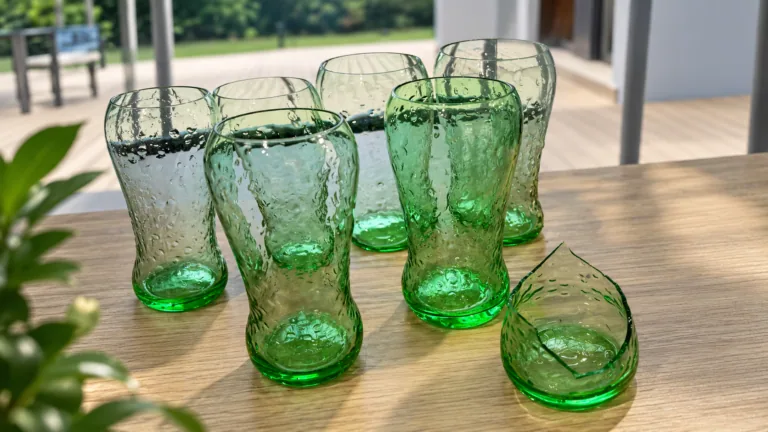
Start with the manufacturing question behind the color
When sourcing colored glassware from China, buyers may receive similar-looking samples from suppliers using very different processes. A reliable evaluation should therefore begin with a basic question: how is the color created, and how will the proposed result be checked during development and production?
Color is only one part of supplier selection. The buyer also needs to understand the factory’s relevant manufacturing experience, sample process, quality-control approach, communication, and ability to work from an agreed product brief.
Ask how the color is made
Some colored glass is produced by adding colorants during the glass-melting process. Other products use a surface treatment applied after the clear glass has been formed. These are different approaches and should not be evaluated as interchangeable without reviewing the intended application.
The process can affect the appearance, surface, use conditions, and approval criteria of the finished item. A supplier should explain which method is proposed for the product and provide samples that allow the buyer to evaluate the actual result.
The exact material system, colorant, finishing process, and performance outcome require project-specific confirmation.
Build a supplier-evaluation checklist
1. Review relevant manufacturing experience
Ask whether the supplier has produced comparable colored glassware in the required form, finish, and application. A general statement that a factory “makes colored glass” is less useful than evidence connected to the buyer’s actual product brief.
Relevant questions may include:
- Which colored-glass processes are available for this project?
- Can the supplier show comparable physical samples?
- Which parts of the process are performed in-house, and which are outsourced?
- What design or color limitations should be identified before sampling?
Do not treat an unverified capability statement as proof of suitability.
2. Request a physical sample
Photographs can help with initial screening, but a physical sample is important for judging color, transparency, surface feel, weight, form, and decoration in context. The sample request should state the target application and the features that matter most.
If possible, ask the supplier to explain how the sample relates to the proposed production method. A sample made by a different process may not be a reliable reference for the final product.
3. Define the color reference
Use a physical reference, approved color reference, or another clearly documented target. Also record the evaluation conditions where relevant, because light, glass thickness, and surrounding colors can influence visual judgment.
Avoid relying on descriptions such as “a little darker” or “less green” without agreeing how the result will be compared.
4. Discuss variation and approval
Color should be evaluated through an agreed approval process rather than an assumption of perfect visual identity. Ask how the buyer and supplier will compare samples, what constitutes an acceptable difference, and which reference controls the decision.
The appropriate acceptance range depends on the product, process, intended use, and buyer’s requirements. It should be defined for the project.
5. Confirm the production and quality-control plan
Before placing an order, clarify:
- how the approved sample will be recorded
- how color and finish will be checked
- how batch variation will be discussed
- which product features are measured or visually assessed
- how non-conforming results will be handled
- which process details remain subject to technical review
When a surface finish may be considered
A surface-coated finish may be appropriate for some short-term, seasonal, promotional, or design-led applications. That decision should be based on the intended use, expected handling, cleaning conditions, appearance requirements, and agreed performance evidence.
For premium hospitality, retail, or repeat-use products, the buyer should request relevant testing information and evaluate a physical sample before assuming that a finish will meet the application’s requirements.
Plan a custom colored-glass OEM project
For a custom order, clarify the following before development begins:
- the target color and reference
- the product shapes and whether multiple SKUs share the same color brief
- the required finish and application
- the sample and approval sequence
- expected order structure and any supplier-stated MOQ
- timing assumptions that still require confirmation
- the internal buyer who gives final approval
The supplier should confirm project-specific MOQ, schedule, process, and quality requirements. Do not rely on generic figures or assumptions from another product.
Final takeaway
The right colored glassware factory is not simply the supplier with the most attractive photograph or lowest initial quote. It is the supplier that can explain the proposed color process, provide relevant samples, identify manufacturing constraints, and work with the buyer on a clear approval standard.
If you are comparing colored-glass suppliers for an OEM project, prepare the color reference, intended application, sample requirements, and decision criteria before requesting a production proposal.
Comparing colored glassware factories?
Share your color reference, intended application, product forms, and sample requirements so supplier capability can be evaluated against the actual project brief. Discuss a Colored Glass project with Eukaglass.
FOR PROFESSIONAL BUYERS
Planning a Glassware Project?
Discuss product requirements, samples, sourcing, manufacturing, or OEM development with our team.