Care guidance must match the product
Handmade glassware may be used in homes, retail displays, restaurants, hotels, bars, events, and other settings. The correct care approach depends on the product design, material, finish, decoration, cleaning equipment, detergent, temperature, handling process, and the supplier’s documented instructions.
For professional buyers, generic advice is a starting point only. Product-specific guidance should be confirmed before it becomes an operating instruction.
Build a care instruction before rollout
Before placing a product into service, clarify:
- where and how it will be used
- how it will be transported and stored
- which cleaning method and equipment will be used
- whether the product has decoration or surface finishing
- how staff will identify damage or unacceptable wear
- who owns replacement and inspection decisions
The supplier should confirm which instructions apply to the actual product. Do not infer suitability from the fact that an item is glassware or handmade.
Handling and washing review
Professional operators may choose a controlled handling process that reduces collisions, contact between pieces, and avoidable damage. The exact method should be adapted to the product and service environment.
Review the following with the supplier and operations team:
- loading and unloading procedures
- separation during washing and storage
- contact points that may create chips or scratches
- detergent and water conditions
- machine-washing or hand-washing suitability
- drying and polishing procedure
Any statement about dishwasher temperature, detergent compatibility, thermal shock, scratch resistance, or cleaning life requires product-specific evidence.
Storage and inspection
Storage should protect the product from avoidable contact, impact, pressure, and contamination. The appropriate arrangement depends on the form, stem, rim, decoration, available space, and service workflow.
Create a simple inspection point for:
- chips or cracks
- visible surface damage
- decoration or finish changes
- unusual cloudiness or deposits
- damage identified during receiving or service
The buyer and supplier should agree what is a defect, what requires removal from service, and what information should be recorded.
Decorated and finished glassware
Gold rims, etched areas, painted details, decals, and other finishes may require care instructions different from plain glass. Before using the product in service, confirm:
- whether soaking is permitted
- whether machine washing is permitted
- which handling points matter
- how the finish will be inspected
- what evidence supports the expected use conditions
Do not assume that a finish is permanent, dishwasher-safe, scratch-resistant, or suitable for food contact without documentation.
Temperature and thermal-change questions
Sudden temperature changes may be relevant to some glassware applications. The correct limits and handling instructions depend on the product and documented testing or supplier guidance.
Before the product is used with hot or cold contents, confirm the applicable temperature range, preheating or cooling instructions, and any restrictions. Do not introduce a universal temperature rule into a professional SOP without product-specific evidence.
Stains, deposits, and cloudiness
Water quality, cleaning chemistry, drying, storage, and repeated use can affect the appearance of glassware. If stains or cloudiness appear, the operator should first follow the supplier’s approved cleaning instructions and investigate the operating conditions.
Home remedies such as vinegar, abrasive powders, files, or polishing compounds should not be presented as universal solutions. They may be unsuitable for a particular glass, finish, decoration, or damaged item.
Damage and replacement
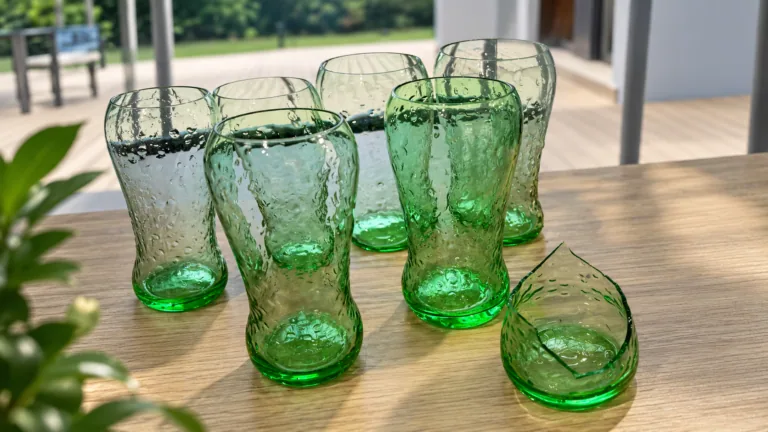
Chips, cracks, scratches, or other damage should be assessed against the product’s use and the operator’s safety procedure. Do not recommend do-it-yourself repair as a general solution for professional serviceware.
The buyer should define when an item is removed from service and how replacement decisions are recorded. Any claim about repairability, structural safety, durability, or service life requires product-specific confirmation.
A professional care checklist
Before rollout, document:
- approved product and finish
- intended service environment
- handling and storage method
- cleaning equipment, detergent, and process
- temperature or use restrictions, if documented
- inspection and removal criteria
- decoration-specific care requirements
- supplier contact for unresolved care questions
Final takeaway
Handmade glassware care should be treated as a product-and-operation review, not a universal list of household instructions. Hotels, restaurants, retailers, and operators can protect the intended product experience by confirming cleaning, handling, storage, inspection, and replacement requirements before rollout.
If you are preparing care guidance for professional glassware use, share the product, finish, cleaning process, service environment, and unresolved handling questions for a project-specific review.
Creating care guidance for hospitality or retail glassware?
Share the product finish, cleaning process, service environment, and inspection questions so the instructions can be checked against the specific item. Discuss a Hospitality Solution with Eukaglass.
FOR PROFESSIONAL BUYERS
Planning a Glassware Project?
Discuss product requirements, samples, sourcing, manufacturing, or OEM development with our team.