Differentiation begins with a product decision
In a market filled with similar-looking products, differentiation does not come from adding decoration at random. It comes from deciding which product characteristics should make the collection recognizable and useful to its intended buyer.
For glassware, those characteristics may include form, proportion, color, texture, surface treatment, decoration, packaging, and the way a product is used. A design brief should explain the role of each choice before the project moves into sampling.
Start with the collection logic
Before developing individual items, define how the collection should work:
- Which pieces belong together visually?
- Which form or detail makes the collection recognizable?
- Which products serve hospitality, retail, gifting, or e-commerce use?
- Which features must remain consistent across the range?
- Which details can change between products?
Collection logic helps prevent every SKU from becoming a separate design experiment.
Form and proportion
The silhouette, rim, base, stem, wall profile, and proportions of a glass affect how it is seen and used. Buyers should distinguish design intent from details that still need physical validation.
Define:
- the intended product role
- essential form characteristics
- functional interfaces or service requirements
- the visual reference for approval
- features that remain open to development
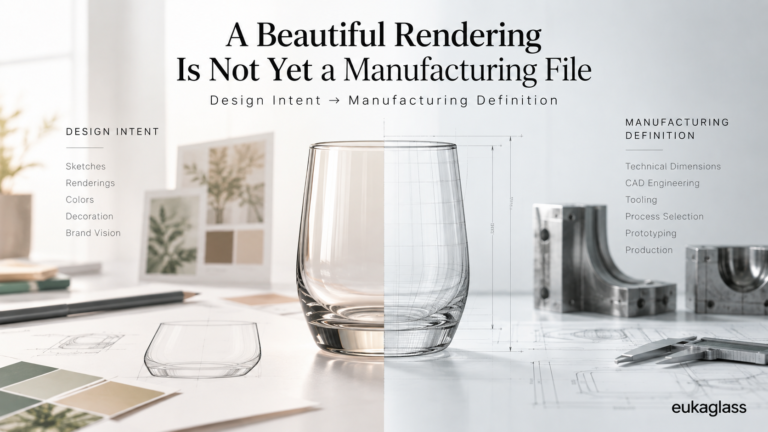
A drawing or rendering is a useful starting point, but a physical sample is needed for questions involving balance, tactile feel, reflections, or actual use.
Color and texture
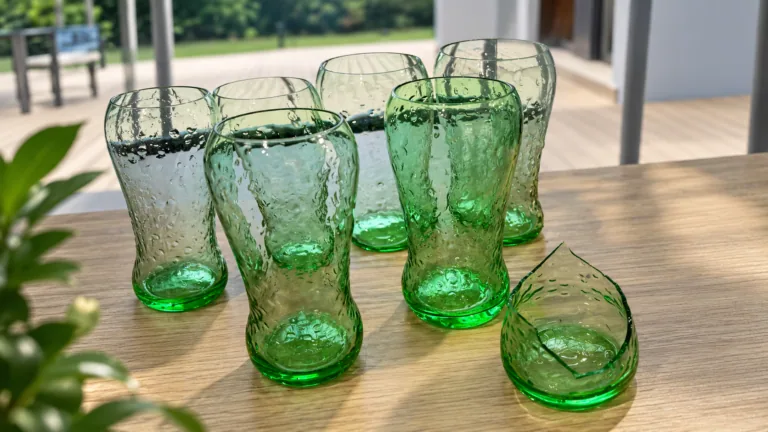
Color can connect products to a brand palette or collection direction. Texture can add contrast, tactile interest, or a recognizable surface effect.
The brief should identify the intended visual result and the reference used for approval. The buyer should separately identify technical questions about color consistency, surface behavior, cleaning, durability, or food contact. Those claims require product-specific evidence.
For texture-related development, the buyer should confirm the intended surface effect, application, and care requirements before approving a finish.

n
n
Decoration and finishing
Engraving, decals, gilding, etching, painted details, or other finishing methods can support branding and collection differentiation. The choice should follow the artwork, product form, application, and approval standard.
Ask:
- What is the required visual effect?
- Where should the detail appear?
- How will placement and scale be approved?
- Does the decoration interact with other finishes?
- Which care, wear, or food-contact questions need verification?
Do not treat a visually successful sample as proof of performance under every cleaning or service condition.
Avoid unnecessary complexity
Additional colors, textures, parts, finishes, and decorations can make a product more distinctive. They can also increase the number of decisions the buyer must control during sampling and approval.
Before adding complexity, ask:
- Does this feature support the collection’s product idea?
- Will the buyer understand its value in the intended channel?
- Can the feature be shown clearly in a physical sample?
- What new manufacturing or care questions does it create?
- What can be simplified without losing the design intent?
The goal is a clear, useful product brief rather than the maximum number of visible details.
Translate design intent into a manufacturable brief
For an OEM development discussion, provide:
- target product and application
- reference images, drawings, or physical samples
- non-negotiable form and function requirements
- color, texture, decoration, and finish requirements
- intended service, retail, gifting, or e-commerce context
- features open to adjustment
- sample review criteria
- documentation or testing requirements
The supplier should identify which requests are feasible, which require prototyping, and which depend on process-specific confirmation.
Different buyers, different design priorities
Design-led brands
Prioritize a recognizable collection logic and a clear relationship between the product and the wider design system.
Premium retailers and e-commerce buyers
Review differentiation, product explanation, packaging, handling, photography, and replenishment requirements alongside the design.
Hospitality buyers
Review the product in the service environment, including presentation, handling, storage, cleaning, replacement, and consistency.
Corporate gift buyers
Define the recipient, occasion, artwork, quantity, presentation, and approval requirements without assuming that every decorative option is suitable.
Keep this distinct from brand-identity planning
Post 357 focuses on how custom glassware can support brand identity. This article focuses more specifically on product differentiation through form, color, texture, decoration, collection logic, and manufacturable design decisions.
[RELATED ARTICLE: Post 357 — Custom Glassware and Brand Identity]
Final takeaway
Product differentiation works best when design choices are purposeful and connected to a manufacturable brief. A distinctive glassware collection does not need unnecessary complexity. It needs a clear product idea, a defined application, useful customization, and an approval process that respects the realities of physical glass.
If you are developing a differentiated glassware collection, share the product concept, target channel, collection logic, customization requirements, and open manufacturing questions for an OEM discussion.
Final CTA
Developing a differentiated glassware collection? Share the target channel, collection logic, design references, customization needs, and open manufacturing questions so the brief can be evaluated before sampling. Discuss OEM / Custom Development with Eukaglass.
FOR PROFESSIONAL BUYERS
Planning a Glassware Project?
Discuss product requirements, samples, sourcing, manufacturing, or OEM development with our team.