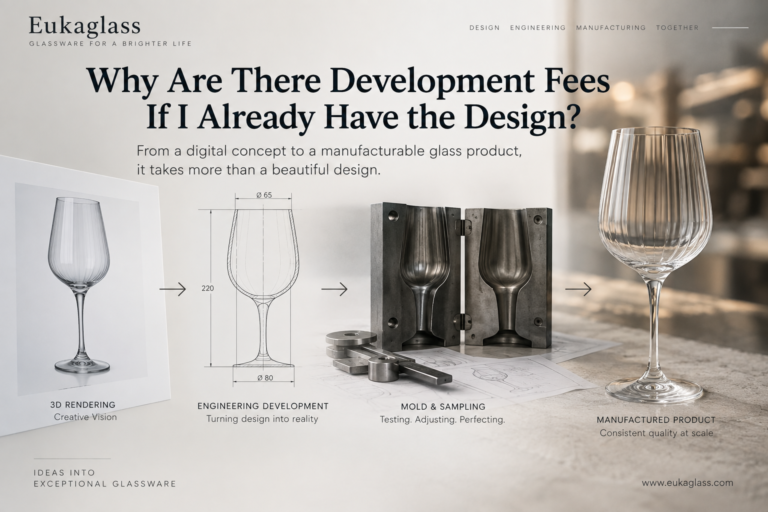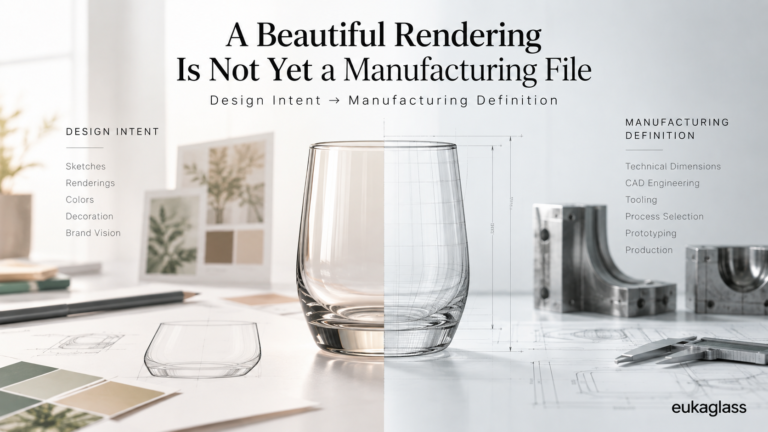
A new sample is not automatically a better sample
In a handmade glassware project, buyers often expect each new version to look closer to the final product. That expectation is understandable, but development does not always move in a straight line.
A later sample may improve one feature while appearing less successful in another. It may reveal that a thinner rim affects stability, that an added decoration changes the process discussion, or that a color adjustment creates a new approval question.
This does not automatically mean the project is going backward. It may mean the team has learned more about the trade-offs that must be resolved before the product is approved.
Why iteration creates trade-offs
Handmade sampling can involve several connected decisions, such as:
- shaping and forming
- rim or edge finishing
- color or surface treatment
- decals, gilding, or other decoration
- multiple finishing steps
When one decision changes, it may affect how another feature is perceived or produced. The buyer may see a more attractive detail, while the manufacturer identifies a new question about stability, consistency, handling, or the next sample round.
The useful question is not simply, “Is this sample better?” It is, “What did this sample teach us, and which trade-off should the next round address?”
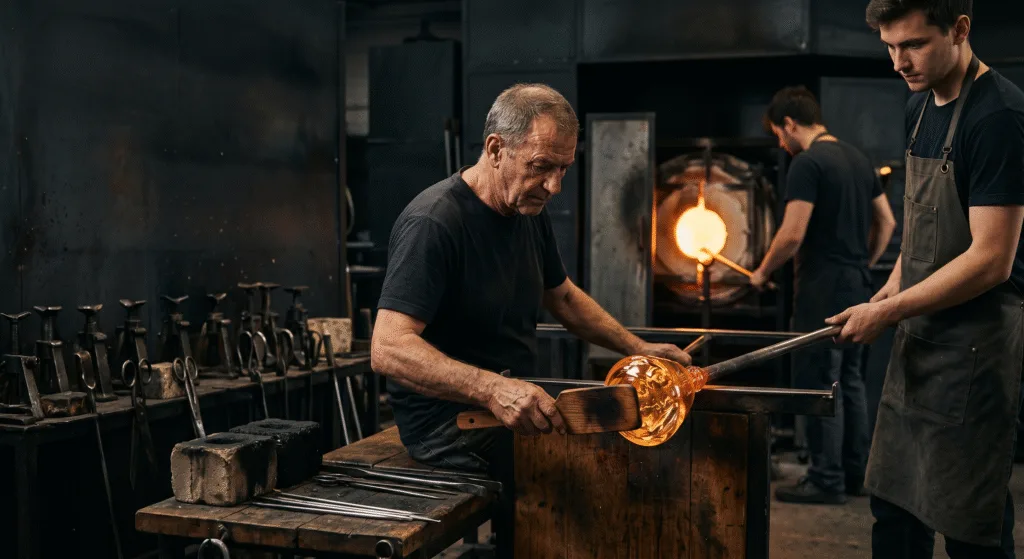
Examples of development trade-offs
A thinner rim
A thinner rim may support the intended visual character, but its comfort, stability, and production implications should be reviewed on physical samples. Do not treat a visual improvement as final until the project team agrees how the feature will be evaluated.
A cleaner surface
A cleaner-looking surface may create additional questions about process control or acceptance criteria. The buyer and manufacturer should define what constitutes an acceptable result for the intended market and application.
Added decoration
Decals, gilding, or multi-step finishing can change the visual impact of a product. They may also introduce additional review points for placement, finish, handling, transport, or use. The relevant effects depend on the project and require confirmation.
A color adjustment
Color changes can improve a visual match while creating new questions about reference standards, lighting, thickness, or batch comparison. A color preference should therefore be reviewed through agreed samples rather than treated as an isolated dial.
Why the best-looking sample may not answer every question
A sample is made under particular development conditions. It may receive individual attention, use a specific process sequence, or be judged primarily for one design objective.
That does not make the sample invalid. It means the team should be clear about what it proves and what it does not yet prove.
For example, the sample may help evaluate:
- silhouette and proportion
- tactile feel
- decoration placement
- the appearance of a color or finish
- suitability for the intended use
Questions about production repeatability, agreed variation, and production approval belong to a later review. Post 314 covers the distinction between prototype feasibility and production repeatability; Post 318 focuses on decisions that cannot be fully confirmed before the first physical prototype.
[RELATED ARTICLE: Post 318 — Why Handmade Glass Decisions Can’t Be Fully Confirmed Before the First Physical Prototype]
[RELATED ARTICLE: Post 314 — Why a “Perfect” Prototype Can Still Fail in Production]
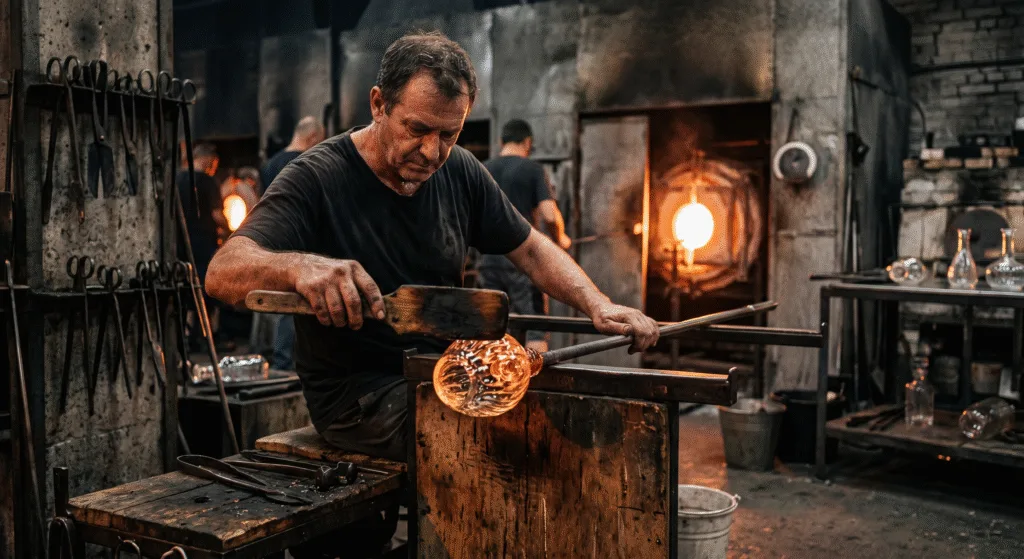
Use a structured review after every sample round
Before requesting the next revision, record:
- What changed from the previous sample?
- Which requirement improved?
- Which new problem or trade-off appeared?
- Which features are now non-negotiable?
- Which features remain open for development?
- What evidence is needed in the next sample?
- Who will approve the next decision?
This turns sampling into a sequence of decisions rather than a series of subjective reactions.
Separate design goals from production questions
The buyer should distinguish between the product experience they want and the process conditions that still need to be evaluated. Useful early inputs may include:
- reference drawings or images
- intended use and service environment
- target form and capacity where already defined
- decoration or color requirements
- the top non-negotiable features
- acceptable areas for design adjustment
- the criteria for reviewing the next sample
Any specification involving durability, yield, volume, lead time, tolerances, or production consistency should be confirmed for the specific project.
Final takeaway
Iteration between sample rounds is a learning process. A sample that looks worse in one area may reveal a trade-off that the team needed to see before making the next decision.
The goal is not to make every sample look perfect in isolation. It is to use each round to clarify the design, the buyer’s priorities, and the manufacturing questions that must be resolved before approval.
If you are reviewing a handmade-glass sample, share what changed, what improved, what became less acceptable, and what the next round must prove.
Reviewing the next handmade-glass sample?
Bring the sample changes, non-negotiable requirements, open trade-offs, and next-round decision criteria into an OEM / Custom Development discussion.
FOR PROFESSIONAL BUYERS
Planning a Glassware Project?
Discuss product requirements, samples, sourcing, manufacturing, or OEM development with our team.