Sustainability decisions increasingly appear in procurement conversations
For luxury hotels, corporate travel, conferences, and MICE business, sustainability may appear in supplier questionnaires, venue comparisons, and proposal discussions. The exact requirements differ by buyer, market, property, and procurement program.
The practical challenge is to show what changed, how the change works in operations, and what evidence the hotel can provide. A strong response should connect sustainability intentions with a product and service system that staff can operate consistently.

Start with the buyer’s actual RFP requirements
Before selecting a product or drafting a response, identify:
- which sustainability questions the RFP asks
- which claims require supporting documents
- which guest-facing touchpoints are in scope
- whether the requirement applies to one property or a wider portfolio
- who owns operational and procurement approval
- what remains a target rather than verified evidence
Do not assume that all corporate or MICE buyers use the same criteria. Requirements should be read and confirmed case by case.
What a procurement team can evaluate
An RFP response is stronger when it separates intention, implementation, and evidence.
Guest-visible application
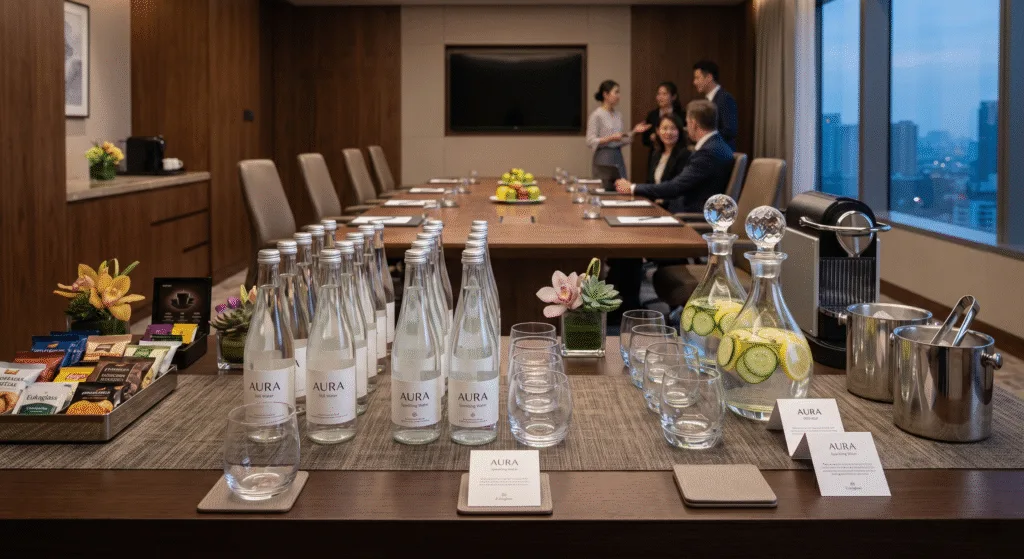
Describe the relevant setting: in-room water service, restaurant water service, breakfast, bar, spa, or event beverage service. Explain what the buyer can actually inspect or compare without claiming that every guest will respond identically.
Operational consistency
Record how the hotel expects the product to be handled, cleaned, stored, replenished, inspected, and replaced. A proposed change should be reviewed with the teams responsible for delivering the service.
Supplier and product documentation
Request the documents needed for the specific RFP and distinguish confirmed information from assumptions. Product descriptions, process statements, testing, certifications, and sustainability evidence should be included only when current and applicable.
Portfolio and event scale
If the proposal covers multiple properties or a large event, identify what must remain consistent and what may vary by location or service format. Do not assume that a small trial proves portfolio-wide suitability.

Choose a defined pilot or application review
Where the buyer and hotel need more evidence, a defined pilot can make the decision easier to review. The pilot should specify:
- the service touchpoint
- the products and quantities under review
- the operating teams involved
- the evaluation period or review point
- presentation and handling criteria
- documentation to be collected
- the decision required after the review
The pilot is not proof of every future outcome. It is a controlled way to identify what works, what needs adjustment, and what remains unverified.
Connect reusable glassware to the operating system
Reusable glassware may be relevant to some hotel and event applications, but suitability depends on the product, service environment, cleaning process, storage, replacement policy, and agreed quality standard.
For an OEM or sourcing discussion, define the intended application, form, presentation, decoration, sampling requirements, and approval criteria. Ask the supplier to identify project-specific limitations instead of relying on a generic claim about a material or product type.

Prepare evidence without overclaiming
For each statement in an RFP response, ask:
- Is this a current requirement, a planned action, or a verified result?
- What document, sample, record, or responsible person supports it?
- Does the evidence apply to this property, product, event, or supplier?
- Is the wording narrower than the evidence, or does it overstate the conclusion?
- What still requires human or supplier confirmation?
This distinction is important for claims about durability, washing, breakage, replacement, environmental performance, certifications, and regulatory compliance.
Common RFP risks
Avoid:
- treating an intention as a measured result
- presenting one hotel’s practice as a portfolio-wide standard without evidence
- using an old survey as current proof of buyer or guest behavior
- promising durability, lifespan, capacity, or service performance without documentation
- implying legal compliance from a general reference to plastic reduction
- describing a supplier as certified or fully compliant without confirming the relevant certificate and scope
These are review controls, not conclusions about any specific hotel or supplier.
A practical RFP checklist
Before submitting a sustainability-related hospitality response, confirm:
- the exact application and guest touchpoint
- the buyer’s required sustainability language
- the product and material description
- the operating and service requirements
- the supplier evidence available for review
- the approval sample or reference standard
- the documentation owner
- the claims that still need verification
- the next decision or RFQ step
Final takeaway
Corporate and MICE RFPs reward clarity more than broad sustainability language. A useful response shows where a change is applied, how it fits the hotel’s operation, what the buyer can verify, and which points still require confirmation.
If your team is preparing an RFP or sourcing review involving hospitality glassware, share the buyer requirements, service application, evidence list, and approval criteria for a focused project discussion.
Preparing a sustainability-related hotel RFP?
Share the buyer’s requirements, service touchpoint, evidence list, and approval criteria so the glassware scope can be reviewed without overclaiming. Review a Corporate & Gift Project with Eukaglass.
FOR PROFESSIONAL BUYERS
Planning a Glassware Project?
Discuss product requirements, samples, sourcing, manufacturing, or OEM development with our team.